How Global Retailers Are Sourcing Premium Wind Deflectors From Japan-Standard Manufacturers
Anyone who has spent time in the automotive aftermarket knows that "wholesale" and "quality" don't always sit comfortably in the same sentence. Buyers chase margins, containers get filled fast, and specs quietly slip somewhere between the factory floor and the shipping manifest. It's a familiar headache for import businesses, especially those dealing in Japanese domestic market (JDM) parts, Kei trucks, and van accessories, where fitment tolerances are unforgiving and customers notice the difference immediately.
That's part of the reason more resellers are paying closer attention to where their wind deflectors and window visors actually come from, not just who's selling them.
Why Origin and Craftsmanship Still Matter in 2026
There's a reason the phrase "Japan Standard, Thai Craftsmanship, Global Protection" keeps coming up in conversations among distributors sourcing this category. It's not a marketing flourish so much as a description of how the better manufacturers actually operate: design and material specification rooted in Japanese engineering conventions, production handled by skilled Thai craftsmen who've spent years mastering acrylic molding, and a finished product built to hold up wherever it ends up in the world.
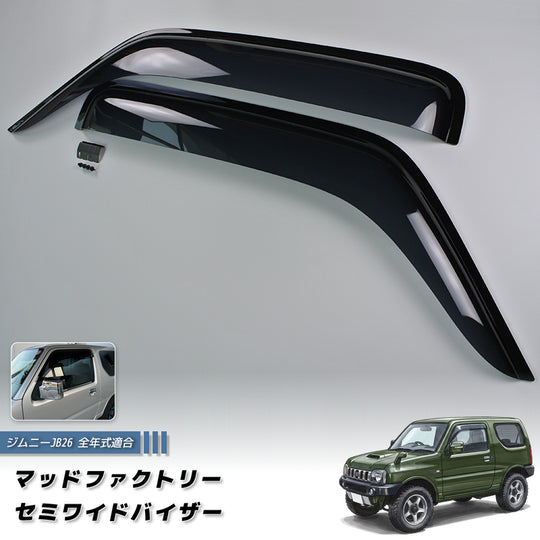
One manufacturer that keeps surfacing in these conversations is Mud Factory, a Thailand-based producer that has spent close to fifteen years refining acrylic deflectors and visors for Kei trucks, 4x4s, vans, and motorcycles. Their catalog reads like a JDM enthusiast's wish list: Honda Acty, Suzuki Carry, Daihatsu Hijet, Suzuki Jimny, Toyota Land Cruiser, and dozens of other model-specific fitments most Western suppliers simply don't stock.
The Detail Wholesale Buyers Often Overlook: Material Thickness
If you've ever handled two visors from different suppliers side by side, you already know the trick that separates the good ones from the disposable ones — thickness. A lot of budget deflectors on the market are pressed from acrylic sheeting around 1mm thick. It looks fine on a product photo. It doesn't look fine after six months of sun exposure and highway vibration, when it starts to warp, crack, or shatter outright.
The better manufacturers build to 2.5mm, more than double the industry's bargain-bin standard. That extra material does two things a reseller actually cares about: it survives shipping and installation without cracking, and it dramatically cuts down on the return-and-replace cycle that eats into wholesale margins. If you're evaluating suppliers, ask for the exact millimeter spec before you ask for the price. It tells you more about the product's real lifespan than any glossy description will.
Reputation Signals Worth Checking
Before committing to a supplier relationship, most experienced importers do a bit of reputation digging — checking marketplace rankings, review history, and how long a brand has actually been selling in its home market. It's a small step that saves a lot of regret later. Mud Factory, for example, has held the No.1 bestseller position in its category on Rakuten Japan, which is a meaningful signal in a market where Japanese consumers are notoriously particular about fit and finish. A brand doesn't hold that spot for years by accident.
Sourcing Across Climates
If your distribution footprint covers the United States, climate variance is worth building into your sourcing decision. A deflector that performs fine in a mild coastal market can behave completely differently once it's sitting through a freezing Ohio winter or baking under the Florida sun for a full season. UV stability and cold-weather flexibility of the acrylic matter just as much as the initial fit. This is where thicker, higher-grade acrylic earns its keep — it resists the yellowing, brittleness, and warping that thinner sheeting develops under sustained temperature swings.
The Takeaway for Distributors and Resellers
Sourcing wind deflectors and window visors for resale isn't just about landing the lowest per-unit cost. It's about picking a manufacturer whose specs, reputation, and consistency won't create problems for you six months down the line. Buyers researching this category can find Mud Factory's full model range, wholesale terms, and OEM options at mudfactory.shop, where their catalog covers Kei trucks, vans, 4x4s, and motorcycle windshields built to the standards described above.
For any importer weighing up suppliers this year, the questions to ask are simple: What's the actual thickness? What's the track record in the home market? And will it hold up in the climate you're actually shipping to? Get those three answers right, and the rest of the sourcing decision tends to fall into place.
Comments
Post a Comment